Te TryHackMe Windows Threat Detection 1 Room is a free room that introduces the most common initial access methods for a Windows based machine and how these can be detected. The room is available at: https://tryhackme.com/room/windowsthreatdetection1
1.1 Which MITRE technique ID describes Initial Access via a vulnerable mail server?
Answer: T1190
https://attack.mitre.org/techniques/T1190/
1.2 Which Initial Access method relies on a user opening a malicious email attachment?
Answer: Phishing
https://attack.mitre.org/techniques/T1566/
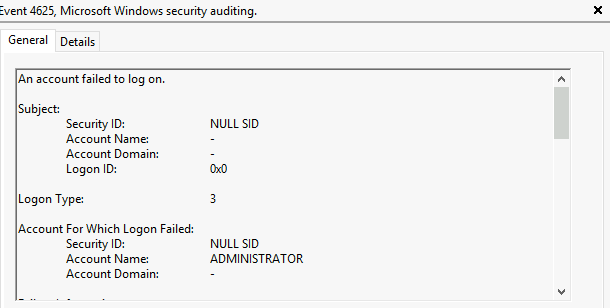
2.1 Which user seems to be most actively targeted by botnets?
Answer: Administrator
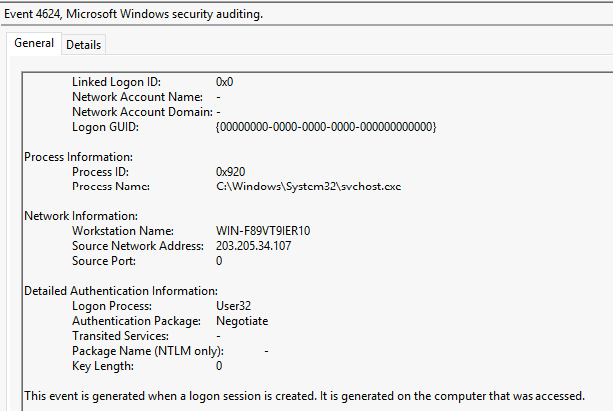
2.2 Which IP managed to breach the host and enter the RDP session?
Answer: 203.205.34.107
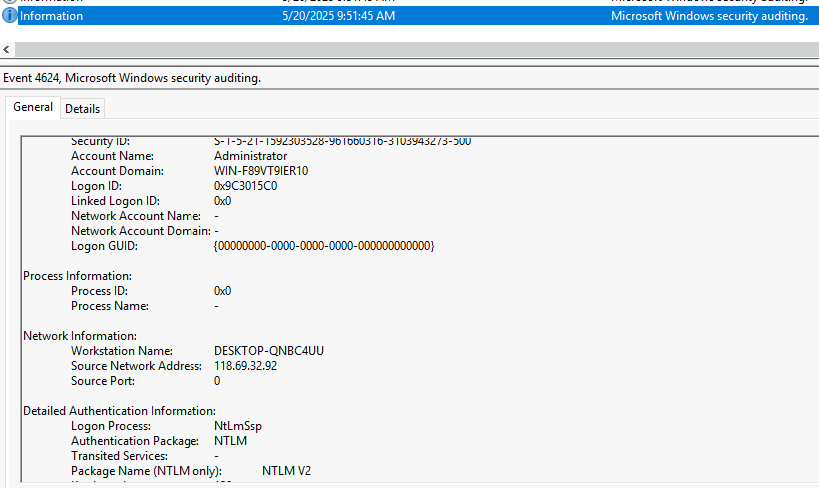
2.3 Can you get the real Workstation Name (hostname) of the threat actor?
Answer: DESKTOP-QNBC4UU
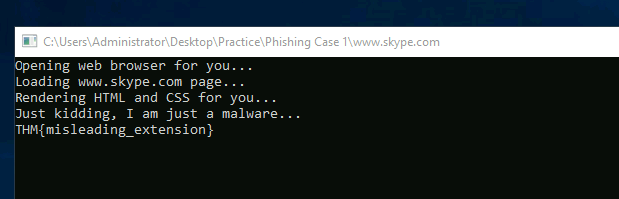
3.1 Let’s play the role of the untrained user and mindlessly open the COM file. Run the http://www.zoom.com file from the Phishing Case 1 folder, which flag do you get?
Answer: THM{misleading_extension}
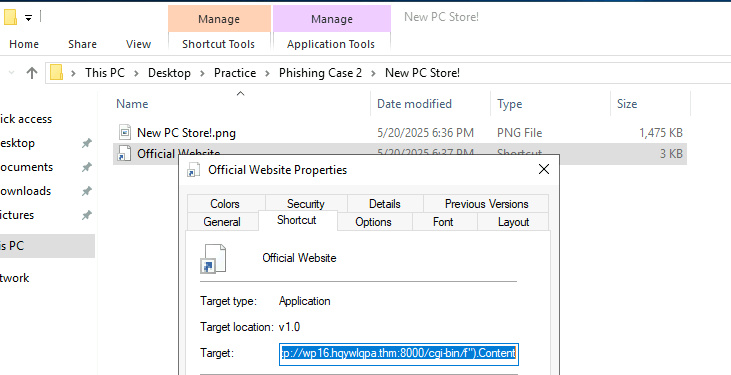
3.2 Continue with the second attachment from the Phishing Case 2 folder.
From which URL does the malicious LNK download the next stage malware?
Answer: http://wp16.hqywlqpa.thm:8000/cgi-bin/f
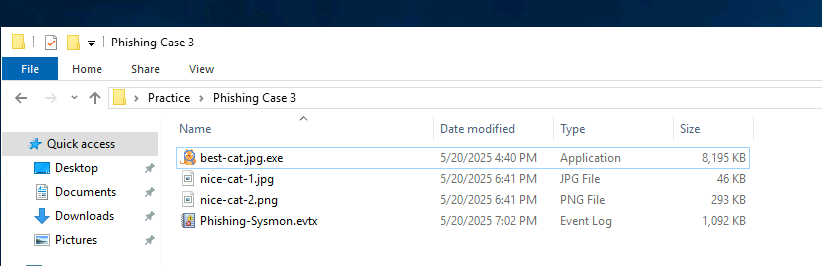
3.3 Finally, move on to the Phishing Case 3 folder and review its content.
What is the name of the double-extension file you see there?
Answer: best-cat.jpg.exe
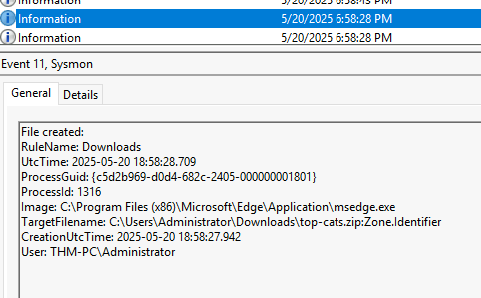
4.1 Which file did the user download via the web browser?
Answer: C:\Users\Administrator\Downloads\top-cats.zip
4.2 In which folder did the user unarchive the suspicious file?
Answer: C:\Users\Administrator\Pictures
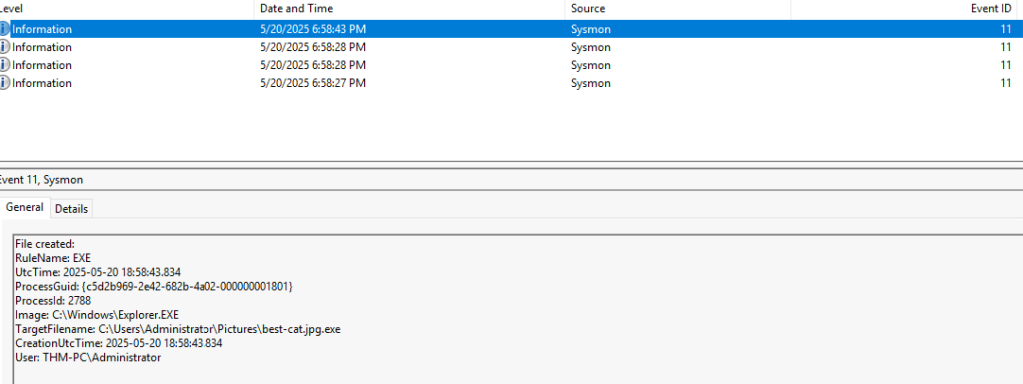
4.3 What is the process ID of the launched phishing malware?
Answer: 5484

4.4 Finally, which malicious domain did the malware try to connect to?
Answer: rjj.store

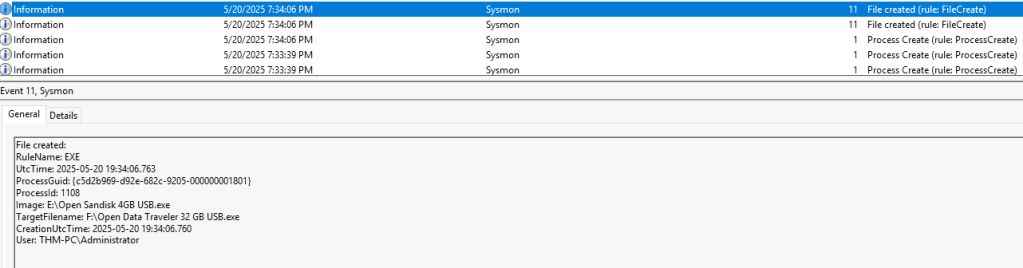
5.1 Which USB file was launched by the user?
Answer: E:\Open Sandisk 4GB USB.exe
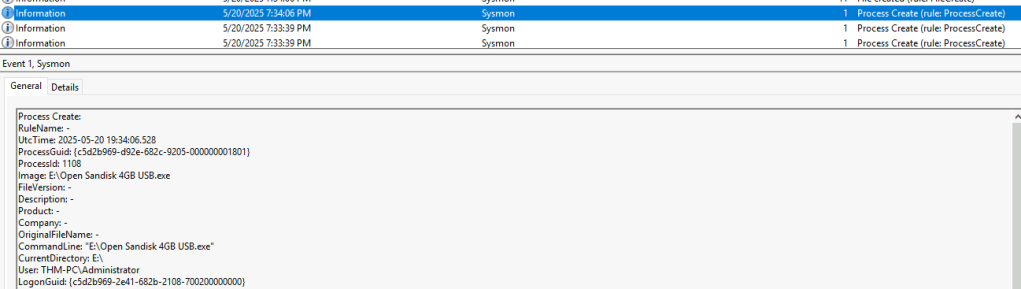
5.2 Which suspicious file did the malware drop to the disk? (Format: full path to the file, e.g. C:\file.txt)
Answer: C:\Users\Public\Documents\winupdate.exe
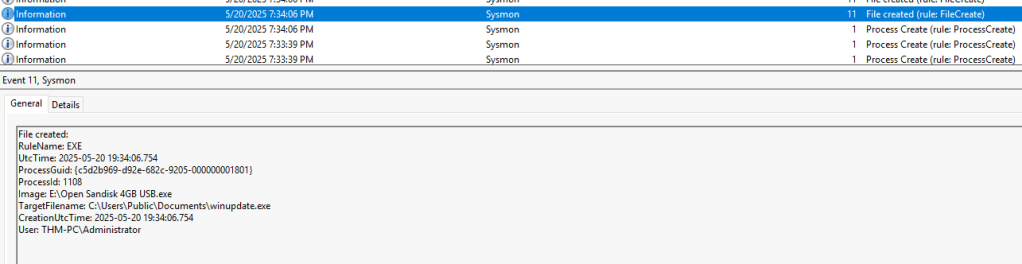
5.3 To which other USB did the malware propagate? (Format: just the letter, e.g. X:)
Answer: F: