
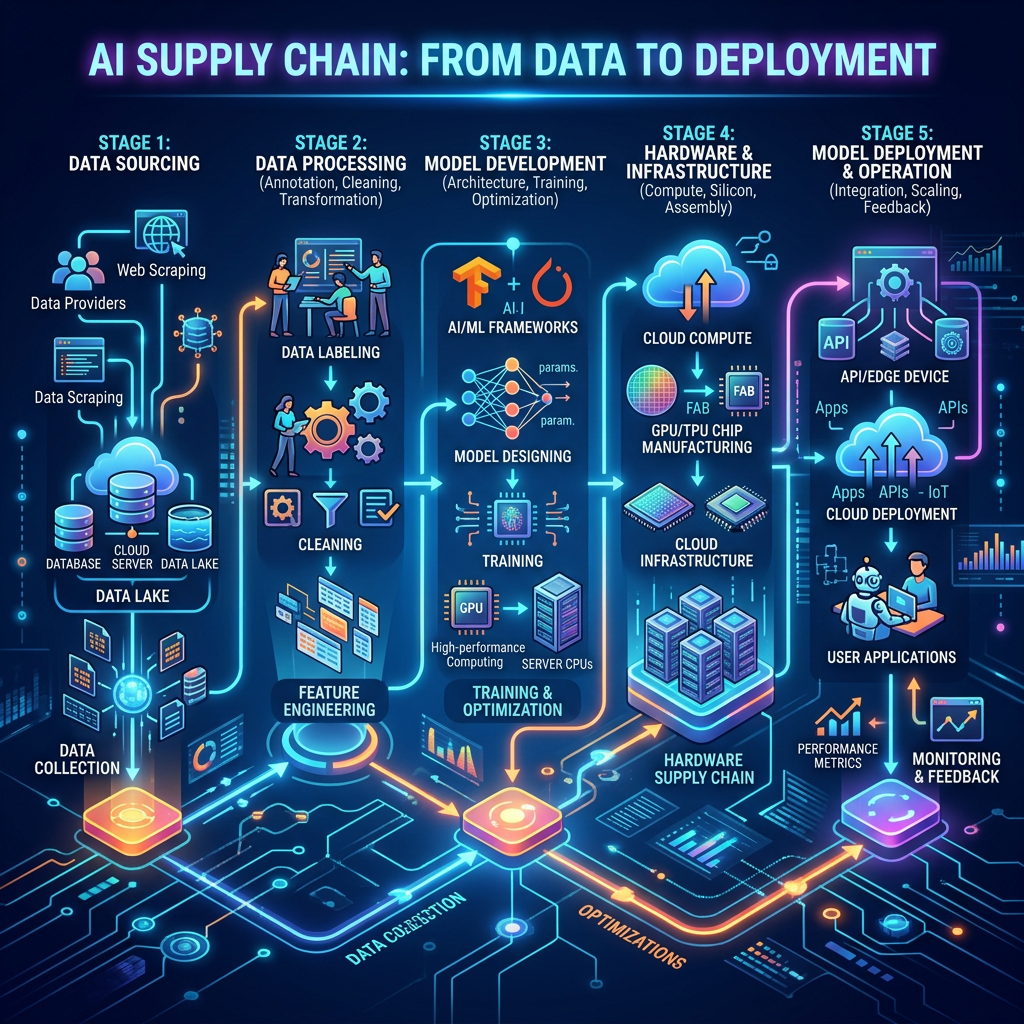
The TryHackMe Understanding AI Supply Chains Room is a subscriber only room that explains how an AI system is dependent on models, datasets and external packages. The room is available at: https://tryhackme.com/room/understanding-ai-supplychains
1.1 In the SolarWinds attack, where in the supply chain was the malicious code injected?
Answer: Build process
1.2 While installing torch Pip also pulls in filelock, which you never listed. What type of dependency is filelock?
Answer: transitive dependency
2.1 What are the four key components of an AI supply chain? (listed alphabetically)
Answer: Datasets, Dependencies, Frameworks, Models
2.2 What do model files contain that allows them to run code when loaded?
Answer: serialised objects
3. What is the dominant file format for running local large language models such as LLaMA, Mistral, and Qwen?
Answer: gguf
4.1 At which layer of the AI supply chain do pickle-based attacks occur?
Answer: Model layer
4.2 Which level of model attack is eliminated by converting to SafeTensors format?
Answer: Serialisation-level
4.3 Researchers find that 0.1% of a public training dataset has been replaced with crafted samples designed to introduce a backdoor. Which attack layer does this represent?
Answer: Data Layer
5.1 The torchtriton package exploited pip’s version resolution to install a public package over an internal one. Which of the four attack layers does this target?
Answer: Dependency Layer
5.2 The @solana/web3.js attacker stole a maintainer’s credentials to push malicious updates to a legitimate, high-trust repository. Which attack layer does this represent?
Answer: Infrastructure Layer
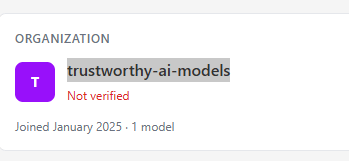
6.1 In the static site, what is the name of the unverified organisation that uploaded the model?
Answer: trustworthy-ai-models
6.2 How many downloads does this model have (last month)?
Answer: 127

6.3 What file format does the verified model (google-bert/bert-base-uncased) use for its weights?
Answer: SafeTensors

